Smoke Alarm Compliance Rules for Victorian Rentals
Smoke alarms are the one piece of rental compliance that gets checked after something goes wrong, which is exactly when you do not want gaps in the paperwork. Since the Victorian rental reforms took effect, every rented home in the state has to have working smoke alarms installed in the right places, tested at least once a year, and repaired or replaced immediately when they fail. This guide explains what the rules actually require, where alarms have to sit in a typical Melbourne property, and how landlords and agents keep evidence that stands up if it is ever questioned.
What the Victorian rules require of landlords
Under the Residential Tenancies Regulations, a rental provider must ensure every smoke alarm in the property is correctly installed and in working order, test each alarm at least once every 12 months, and replace any alarm that has passed its expiry date or fails a test. Batteries in battery-powered alarms have to be replaced annually as well.
The rental provider also has to give the renter written information about how the alarms work and how to test them, and any alarm that stops working must be repaired as an urgent repair. Urgent means what it says: it is in the same category as a burst pipe or a dangerous electrical fault, not something that waits for the next routine inspection.
Renters have obligations too. They must not tamper with or remove an alarm, and they need to tell the rental provider as soon as an alarm develops a fault. Practically, that means a clear reporting path and a fast response when a tenant rings about beeping or a red light that has stopped flashing.
Where alarms have to be installed in a Melbourne home
Placement is set by the Building Code and AS 3786, and it depends on when the home was built. Every property needs at least one working alarm on each storey. In single-storey homes, alarms go between the bedrooms and the rest of the house, in the hallway or path of travel to the exit. Where bedrooms are spread across different parts of the house, you need an alarm in each of those hallways.
Homes built or substantially renovated after August 1997 need hardwired alarms with a battery backup, powered from the property circuits rather than a nine-volt battery. Newer builds also need alarms interconnected so that when one triggers, they all sound. Interconnection is the single biggest safety improvement for a two-storey property, because a smouldering fire downstairs wakes people upstairs.
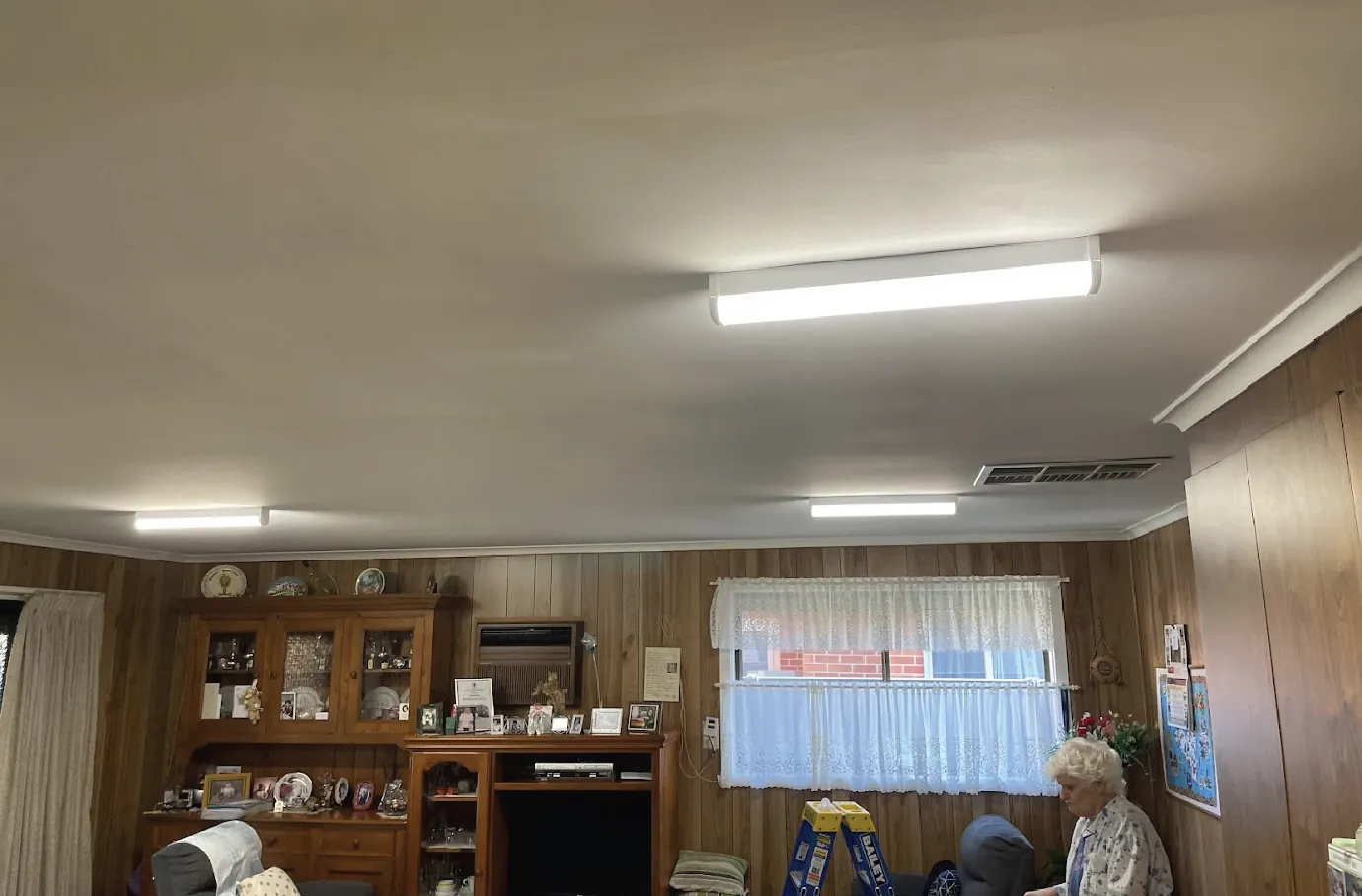
There are placement traps worth knowing. Alarms too close to a kitchen, bathroom or laundry cause nuisance alarms and get disconnected by frustrated tenants. Alarms in the apex of a cathedral ceiling can sit in dead air. Alarms within 400mm of a light fitting, ceiling fan or air conditioning outlet can be affected by air movement. Getting the positions right the first time prevents the phone calls later.
Photoelectric versus ionisation alarms
Fire authorities across Australia recommend photoelectric alarms for residential use. They respond faster to the slow, smouldering fires that start in furniture, bedding and electrical wiring, which are the fires most likely to occur overnight while people are asleep.
Ionisation alarms respond faster to fast-flaming fires but are far more prone to nuisance triggering from cooking and steam, which is what leads to alarms being pulled off the ceiling. If a property still has old ionisation units, replacing them with interconnected photoelectric alarms during the next inspection cycle is a sensible upgrade.
Every alarm has an expiry date printed on the housing, usually ten years from manufacture. The sensor chamber degrades over time, so an alarm past its date is not compliant even if it still beeps when you press the test button. When we attend a property we check dates on every unit, not just function.
Testing, records and what agents want to see
An annual test is more than pressing the button. A proper compliance check confirms each alarm sounds at the required decibel level, verifies interconnection where it is fitted, checks the expiry date, replaces backup batteries, cleans dust from the sensor chamber and confirms the alarm is in a compliant position.
What protects a landlord afterwards is the record. We provide a written report listing every alarm, its location, its type, its expiry date and its test result, dated and signed. Agents file that against the property, and it is exactly the document that gets requested if there is ever an insurance claim or a dispute at VCAT.
If we replace or relocate hardwired alarms, that is electrical work, so the job is also completed with a Certificate of Electrical Safety. Our smoke alarm installation service covers testing, replacement and full compliance reporting in a single visit.
Common compliance failures we find
The most common issue by a wide margin is expired alarms. Properties bought a decade ago and never revisited routinely have every unit out of date. The second is missing coverage, usually a bedroom extension or a converted garage bedroom with no alarm in its hallway.
Third is disconnected alarms. A tenant sick of nuisance alarms while cooking removes the battery or unclips the base. That is a tenant breach, but the property is still non-compliant on the day of inspection, which is why annual checks matter.
Fourth is a hardwired alarm on a circuit that keeps tripping. If the lighting circuit feeding the alarms drops out, the alarms fall back to battery and eventually die quietly. That usually points to a deeper problem worth investigating with proper electrical fault finding rather than repeatedly resetting the breaker.
Booking compliance work across Melbourne
We handle single properties and portfolios, and we can coordinate access with agents so the tenant only has one appointment. Most homes take under an hour. Where alarms are being upgraded from battery to hardwired and interconnected, allow half a day.
If you manage multiple properties in the inner north or inner west, we regularly do compliance rounds in areas like Brunswick and Footscray, where a lot of older unit stock still runs battery-only alarms.
Every job is quoted as a fixed price before we attend, booked jobs carry no callout fee, and you get the compliance documentation the same day. Call Near Me Electrical on 0405 592 496 or request a quote and we will book a time that works around your tenants.