20% Off · First-Time & Seniors20% Off for First-Time Customers & Seniors, Mention This Website When Booking
Claim →Claim Offer →
EV Charger
Installation
Brunswick
Done Properly.
Single side driveway, corrugated carport, or a board still running porcelain fuses — Brunswick throws a bit of everything at us. We sort the wiring first, then the charger.
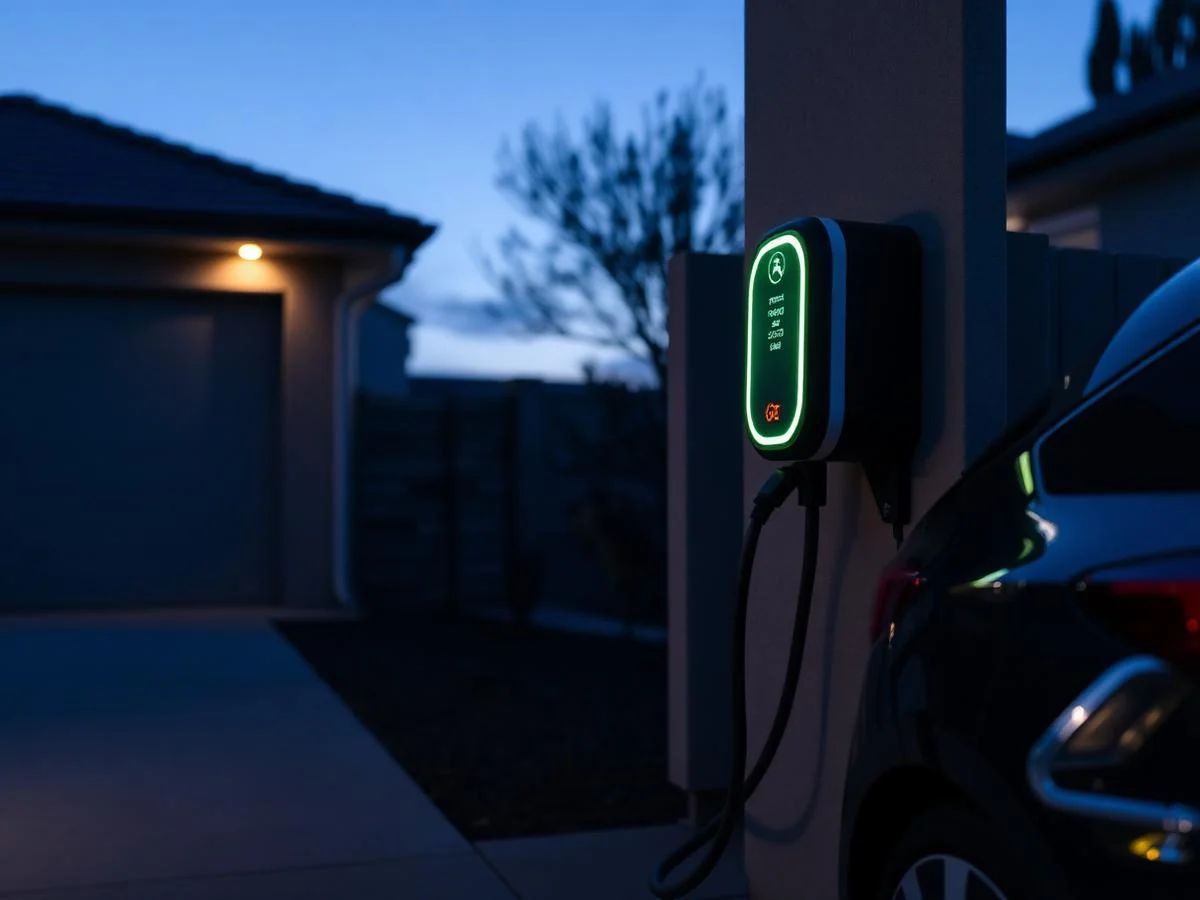
Brunswick Done Properly.
Single side driveway, corrugated carport, or a board still running porcelain fuses — Brunswick throws a bit of everything at us. We sort the wiring first, then the charger.
EV Charger Installation in Brunswick
Brunswick's workers cottages, many of them built well before double garages were ever a consideration, typically have parking down one side of the block on a narrow driveway, or access via a rear laneway off a street running parallel to Sydney Road. Some have a corrugated iron carport bolted on at some point over the decades; others just park on the driveway itself.
What we run into more often here than almost anywhere else is an original switchboard that's never been properly upgraded — still running porcelain fuse carriers or a mix of old and newer circuits from partial renovations. Before an EV charger goes anywhere near a Brunswick cottage, the board usually needs a look, sometimes more than a look.
There's also a real mix of warehouse and studio conversions scattered through the suburb, particularly near the old industrial pockets off Sydney Road, with roller-door parking that's a completely different install to a heritage cottage next door.
In short
Who should I call for EV charger installation in Brunswick?
Near Me Electrical installs EV chargers in Brunswick workers cottages, laneway-access properties and warehouse conversions off Sydney Road, and we're upfront when an old porcelain-fuse board needs attention before the charger goes in. We're A-Grade licensed, quote a fixed price and issue a CES on completion.
Side driveways, laneways and corrugated carports
A single side driveway is usually the easiest scenario to cable for, since it typically runs close to the house and the meter box isn't far away. Rear laneway access adds distance and sometimes a boundary fence run, similar to what we see in Richmond, though Brunswick blocks tend to be a touch wider so the run is often more manageable.
Corrugated carports need a mounting point that's actually solid enough for a wallbox — a lot of older carport posts and lean-tos aren't rated for anything beyond holding themselves up, so we sometimes fix the charger to the house wall instead and run cable out to the parking area.
Porcelain fuses and old switchboards
Porcelain fuse carriers were standard decades ago and plenty are still doing their job, but they don't give you the protection a 7kW EV circuit needs, and there's often no room on the board for a new RCBO anyway. In these cases we recommend addressing the switchboard as part of the same job rather than bolting an EV circuit onto ageing infrastructure.
It's not always a full rewire — sometimes it's a partial board upgrade to create the capacity and protection needed, and we'll tell you plainly which situation you're in after inspecting the board, rather than assuming the worst.
- Switchboard inspection before any EV quote is finalised
- Partial or full board upgrade where porcelain fuses are still in service
- Dedicated 32A circuit with RCBO once the board can take it
- Cable routing suited to side driveways, laneways and carports
- Fixed price agreed before work starts
- CES issued on completion
Warehouse and studio conversions off Sydney Road
Converted warehouses and studios tend to have newer, more capable switchboards than the surrounding cottages, and roller-door parking that sits close to the internal switchboard, making for a comparatively quick and tidy install.
We still check load carefully in these buildings, though, since a lot of them run workshop or studio equipment alongside residential circuits, and an EV charger needs to be accounted for in that total load rather than added blind.
What every Brunswick job includes
- A-Grade licensed electrician (REC 37474), $20M insured
- Fixed price agreed in writing before we start
- $0 callout fee on booked jobs
- Work completed to AS/NZS 3000
- Certificate of Electrical Safety on completion
- Lifetime workmanship guarantee
What Brunswick customers say
"Old Sydney Road cottage, knob-and-tube in the roof. Rewired safely, no drama, fixed price held."
"Studio conversion needed extra circuits and USB points. Turned up on time, tidy work, easy to deal with."
EV Charger Installation in Brunswick: common questions
Do I need a switchboard upgrade before an EV charger in an older Brunswick cottage?+
Often, yes, particularly if the board still has porcelain fuse carriers rather than circuit breakers. We inspect the board as part of every quote and tell you clearly whether it's a partial upgrade, a full replacement, or already good to go before pricing the EV circuit.
Can a corrugated iron carport actually support an EV charger?+
Usually not on its own — most older carport frames aren't built to carry the weight and vibration of daily charger use safely. We often mount the charger to the house wall instead and run protected cable out to the parking area, which is more durable long-term anyway.
How far can the cable run down a side driveway or laneway?+
Further than most people expect, provided we size the cable correctly for the distance to avoid voltage drop. We measure the actual route on site rather than estimating, since laneway access in particular can add several extra metres compared with a straightforward side driveway.
Are warehouse conversions in Brunswick easier to wire for EV charging?+
Generally yes, since the switchboards tend to be newer and the parking sits close to it. The main thing we check is total load, since studio or workshop equipment already on the board needs to be factored in alongside the new EV circuit.
Ready when you are
Book your Melbourne electrician today.
Fixed price before we start. Licensed local electrician on site, often within days. From a single power point to a full home rewire, we quote it upfront and leave the place spotless.